
Packaged Solutions Group Partners with Leading Food Producers and Retailers to Tackle Food Surplus Using Black Soldier Fly Technology
Norfolk, UK April 2025 – Packaged Solutions Group (PSG), a trusted partner to the UK food industry since its founding in 2017, has officially launched its Black Soldier Fly (BSF) operation at its flagship The Sustainability Hub in Wisbech, Norfolk. This milestone marks a transformative step in the fight against food surplus—uniting established food producers and retailers in a breakthrough model of circular, nature-based sustainability.
In less than a decade, PSG has become a leader in organic waste management and circular food systems initially through anaerobic digestion (AD) and now through insect biotechnology. By turning food surplus into high-value outputs, PSG supports scalable solutions for emissions reduction, supply chain resilience, and circular food systems.
How the Technology Works
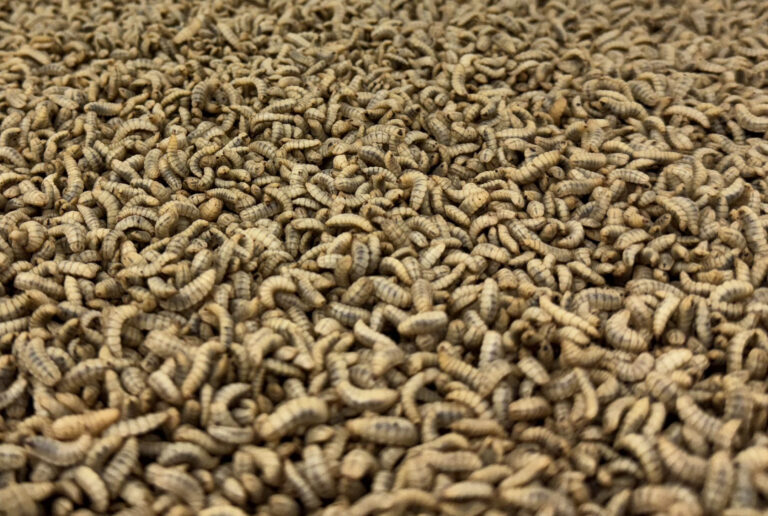
At the heart of the operation is Packaged Organics, a PSG division running proprietary Bio-Conversion Units developed with sister division Packaged Insight. These systems process over 10,000 tonnes of surplus food per year using Black Soldier Fly larvae, which break down organic matter into:
- Insect protein – For aquaculture and premium pet food
- Insect oil – A renewable alternative to palm and fish oils
- Pulp and skins – Used in biodegradable products and pet feed
- Frass – A nitrogen-rich fertiliser with natural insect-repellent properties, ideal for flowering plants and tomatoes
5 tonnes of food surplus into 2.5 tonnes of larvae and 2.5 tonnes of frass, with zero residual waste. The larvae self-harvest and the adult flies do not bite or feed, making the system efficient, clean, disease free and self-sustaining.
Environmental and Economic Advantages of BSF
Environmental Advantages
- High Waste Conversion Efficiency: BSF larvae rapidly consume large volumes of organic waste, reducing mass and volume by up to 75%.
- Low Emissions: BSF systems produce significantly fewer greenhouse gases compared to traditional waste disposal and livestock systems.
- Minimal Land and Water Use: Requires a fraction of the resources needed for conventional protein sources like soy or fishmeal.
- Zero-Waste Process: All outputs—larvae, oil, frass, and by-products—can be repurposed or sold, leaving no residual waste.
Economic Advantages
- Valuable Co-Products: Produces high-value insect protein, oil, and fertiliser (frass), creating new revenue streams for partners.
- Reduces Disposal Costs: Diverts food surplus from landfills or incineration, lowering waste management costs for producers and retailers.
- CSR & Compliance: Helps companies meet environmental targets and net-zero goals.
- Scalable and Modular: BSF systems can be scaled to suit small or large operations and can be integrated into existing waste infrastructure.
Closing the Loop with the Food Industry
PSG’s approach is grounded in real-world application. In partnership with major UK retailers and food producers, surplus food is bio-converted and returned to supply chains in the form of insect-based ingredients. These are used in products such as eco-friendly dog food and sustainable feed, creating a true circular economy in action.
PSG and a leading supermarket are now close to delivering a national UK first: surplus food collected from the supermarket’s supply chain is processed at PSG’s Wisbech facility using Black Soldier Fly technology, and then reintroduced to store shelves as own-brand, insect-based pet food. This groundbreaking model represents a complete circular loop—from shelf to shelf—reducing waste, lowering emissions, and unlocking value.
“It’s a win for sustainability, a win for retailers, and a win for conscious consumers. This collaboration sets the benchmark for what a regenerative, low-carbon supply chain can look like in the UK.”
The Sustainability Hub
The 45,000 sqm Wisbech Sustainability Hub serves as PSG’s headquarters and innovation centre. The site features:
- Solar energy and rainwater harvesting systems
- Polytunnels and test farms for applying frass in horticulture
- Full certification to GMP+, APHA, Food Hygiene, and Clean standards
- A dedicated R&D centre developing biotech and telemetry tools
- A secure destruction service with WASP traceability system for palletised stock and confidential auditing
These assets allow PSG to manage all forms of organic matter on-site, supporting both regulatory compliance and corporate sustainability reporting (CSR) for partners.