
Our Packaged Organics Division is driving innovation across the food manufacturing and waste management sectors by transforming 100% of food by-products into sustainable, edible surplus. We combine proven technologies with scalable, robust processes to deliver high-impact, circular solutions.
A key innovation is our use of Black Soldier Fly (BSF) technology for bio-conversion—a cutting-edge method that plays a vital role in achieving zero carbon goals through the reuse of food in a closed-loop system.
This technology is deployed at our Wisbech-based Sustainability Hub, using our proprietary Bio-Conversion Units, developed in collaboration with the Packaged Insight Division. The facility will soon expand to include a full-scale BSF production unit, capable of processing over 10,000 tonnes of organic surplus per year—significantly scaling up our capacity to support food manufacturers, retailers, and waste processors.
At Packaged Organics, we harness our expertise in animal feed and food production alongside the power of BSF biotechnology to revolutionise food surplus management. This process transforms food waste into high-value, sustainable co-products—driving down emissions, improving resource efficiency, and enabling circular outcomes.
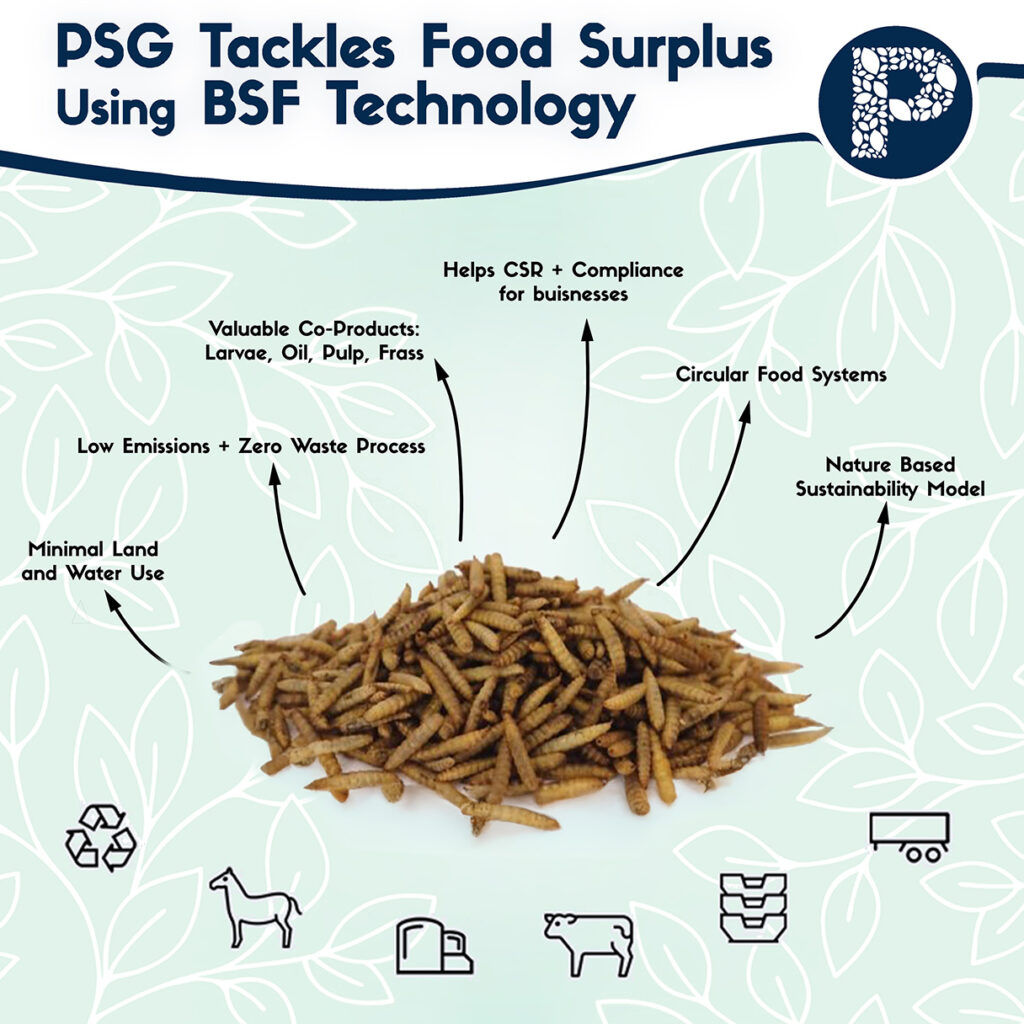
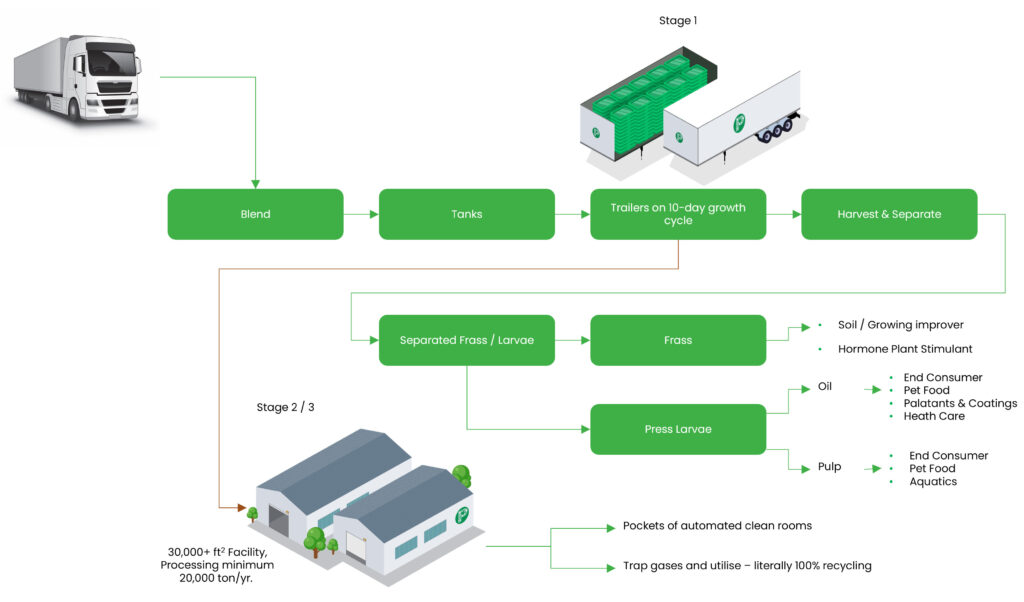
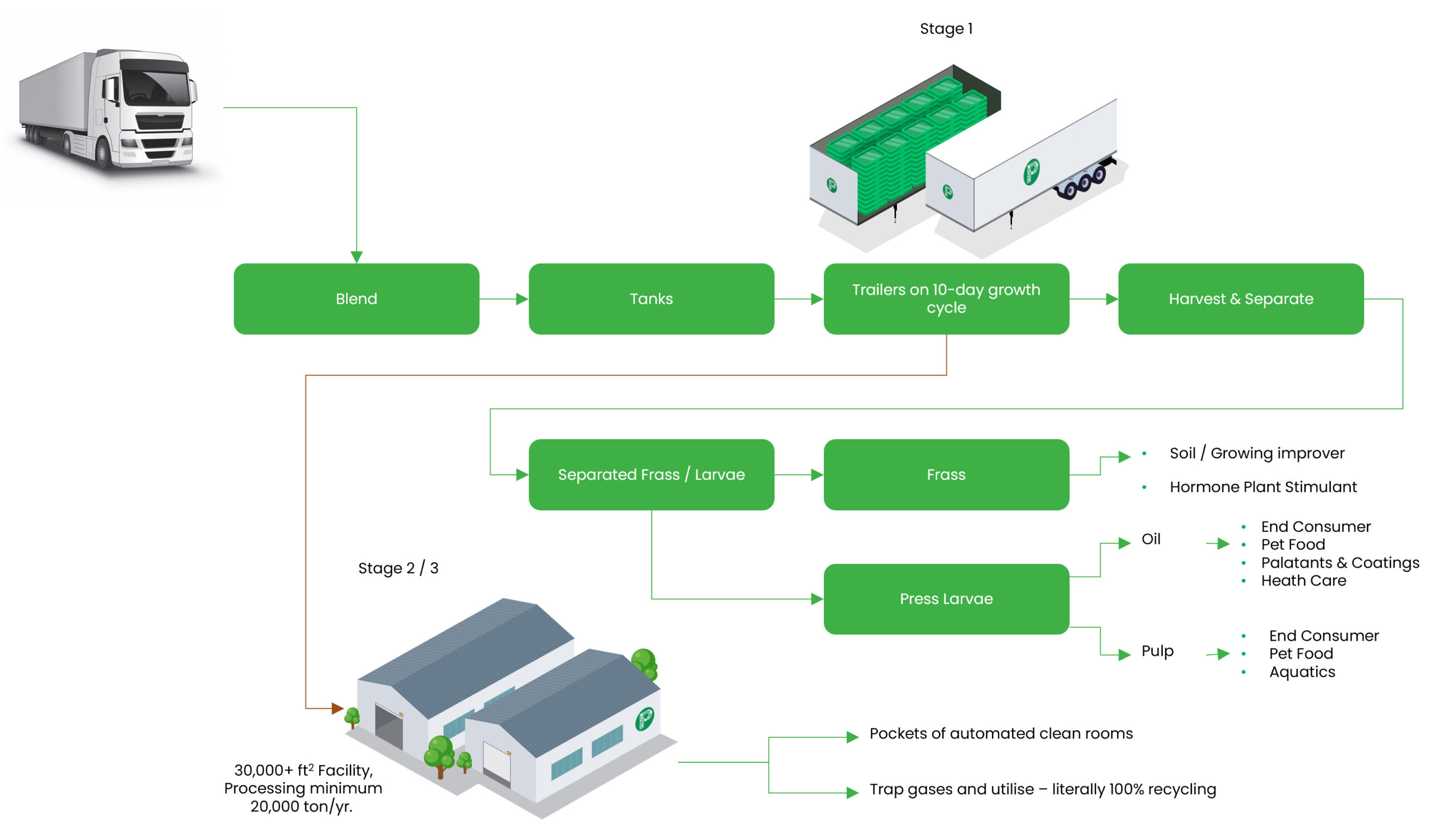
BSF larvae rapidly consume organic matter, converting it into:
Our Packaged Organics Division is driving innovation across the food manufacturing and waste management sectors by transforming 100% of food by-products into sustainable, edible surplus. We combine proven technologies with scalable robust processes to deliver high-impact, circular solutions.
A key innovation is our use of Black Soldier Fly (BSF) technology for bio-conversion — a cutting-edge method that plays a vital role in achieving zero carbon goals through the reuse of food in a closed-loop system.
This technology is deployed at our Wisbech-based Sustainability Hub, using our proprietary Bio-Conversion Units, developed in collaboration with the Packaged Insight Division. The facility will soon expand to include a full-scale BSF production unit, capable of processing over 10,000 tonnes of organic surplus per year — significantly scaling up our capacity to support food manufacturers, retailers, and waste processors.
At Packaged Organics, we harness our expertise in animal feed and food production alongside the power of BSF biotechnology to revolutionise food surplus management. This process transforms what would otherwise be food waste into high-value, sustainable co-products—driving down emissions, improving resource efficiency, and enabling circular outcomes.
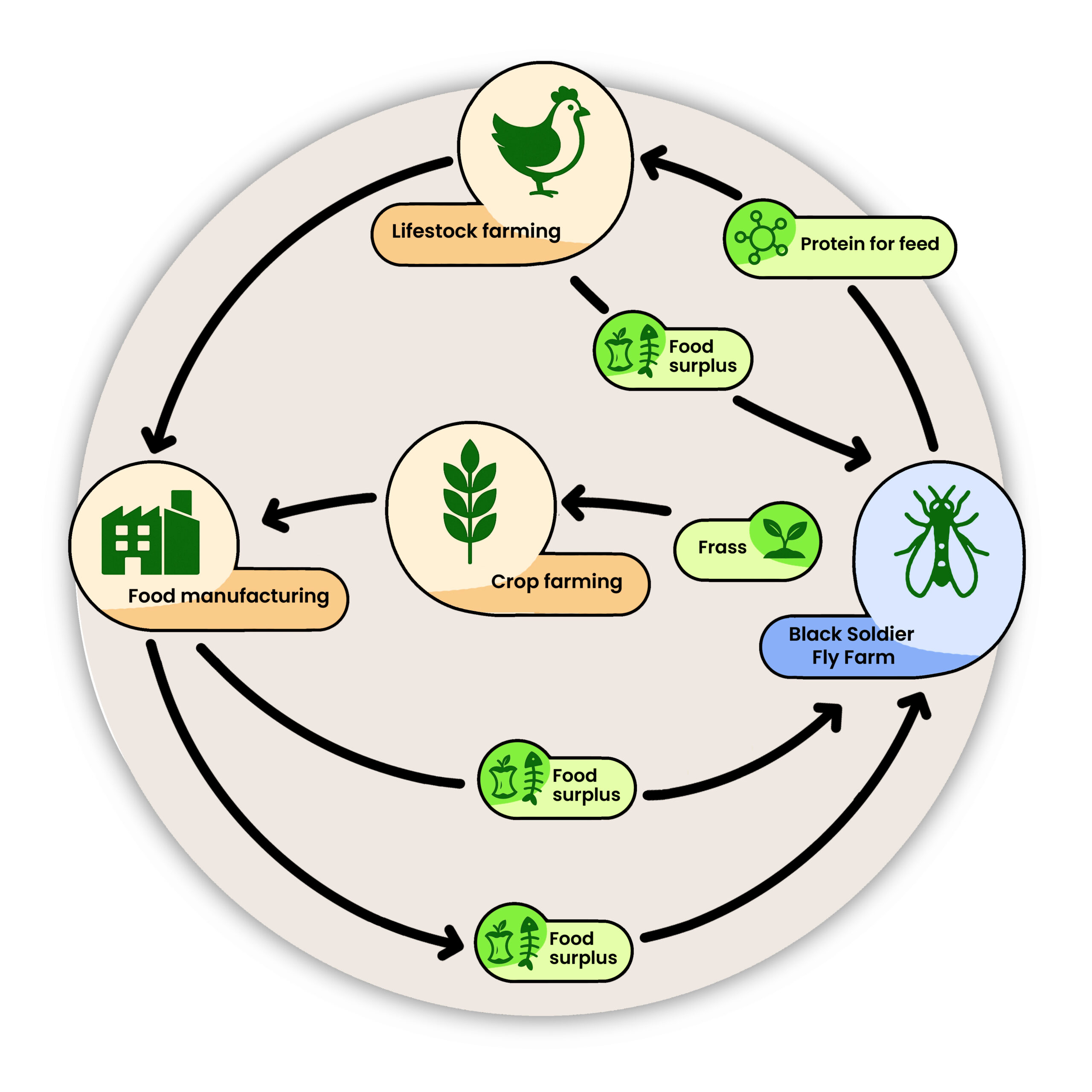
BSF larvae rapidly consume organic matter, converting it into: